Power Pages architecture
Power Pages ArchitecturePower Pages Architecture – How It Works Behind the Scenes
Power Pages provides a secure, scalable, and highly available platform for building business-critical websites. Every production Power Pages website follows a standardized architecture designed for high performance, scalability, and reliability.
Here are the key components that make up a Power Pages website:
Content Delivery Network (CDN)
- Improves website performance by reducing latency.
- Caches static content closer to users for faster load times.
- Comes with an out-of-the-box CDN enabled by administrators.
- Supports external CDNs including Azure Front Door, Akamai, Cloudflare, and Imperva.
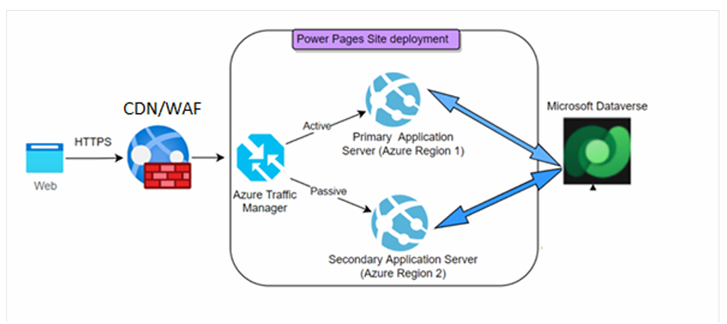
Web Application Firewall (WAF)
- Inspects incoming traffic to block common attacks (XSS, SQL injection, file inclusion).
- Provides a built-in WAF that is easy to enable.
- Supports integration with customer-managed WAF solutions such as Azure Front Door or third-party providers.
Azure Traffic Manager
- Configured in an active-passive mode for high availability.
- Intelligently routes users to the best available application server.
- Ensures business continuity and disaster recovery.
Application Servers
- Power Pages runs on multiple application servers across Azure data center regions.
- Continuous monitoring ensures traffic redirects automatically if a server becomes unavailable.
- Server locations align with the Power Platform environment region to reduce latency.
- Automatic scaling is based on licensing capacity tied to the site’s environment.
Microsoft Dataverse
- Acts as the core data platform for Power Pages.
- Stores website metadata such as pages, site settings, and user information.
- Stores business data displayed on the site.
- Uses a secure server-to-server connection for safe and reliable data access.